 how-to
7 Steps to Host an Effective Open House in Frisco
Last Updated: October 29, 2026
Quick Summary
Host an effective open house in Frisco by launching it within the first 7 to 10 days after your listing goes live, while buyer attention is fresh. Prepare with a deep clean, decluttering, and staging, promote it on a two-week calendar, then follow up with every visitor within 24 hours.
- Remove roughly a third of what sits on counters and shelves before buyers arrive.
- Post the event to MLS remarks 10 days out so buyer's agents can plan to attend.
- Ask sign-in guests for their timeline, agent status, and how they found the open house.
- Keep at least two people present and keep the sign-in sheet at the door.
- Review visitor count, follow-up reply rate, and showing requests after each event.
Table of Contents
- Why Timing and Local Awareness Make or Break Your Frisco Open House
- Your Complete Open House Checklist for Sellers
- Open House Marketing Ideas That Fill the Room
- Open House Sign-In Sheet Questions That Capture Real Leads
- Creating a Welcoming Atmosphere: Greeting, Refreshments, and Accessibility
- Open House Follow-Up Email Template and Lead Nurturing
- Safety, Privacy, and Liability: Protecting Your Home and Visitors
- Measuring Results and Deciding What to Adjust
- Frequently Asked Questions
Why Timing and Local Awareness Make or Break Your Frisco Open House
That short window is why timing is the first decision, not the last. Launch too late and you are hosting a party for neighbors who already drove past.
Local awareness changes the math too. Frisco draws relocating families who are learning the area from scratch, so a well-run open house doubles as a first impression of the neighborhood, not just the property.
Below, we walk through seven steps, from prep to follow-up, so you can host an effective open house in Frisco without guessing.
Your Complete Open House Checklist for Sellers
Preparation is where most sellers lose momentum. The work splits into two jobs: making the home clean and neutral, then staging it so rooms read clearly.
Clean, Declutter, and Depersonalize
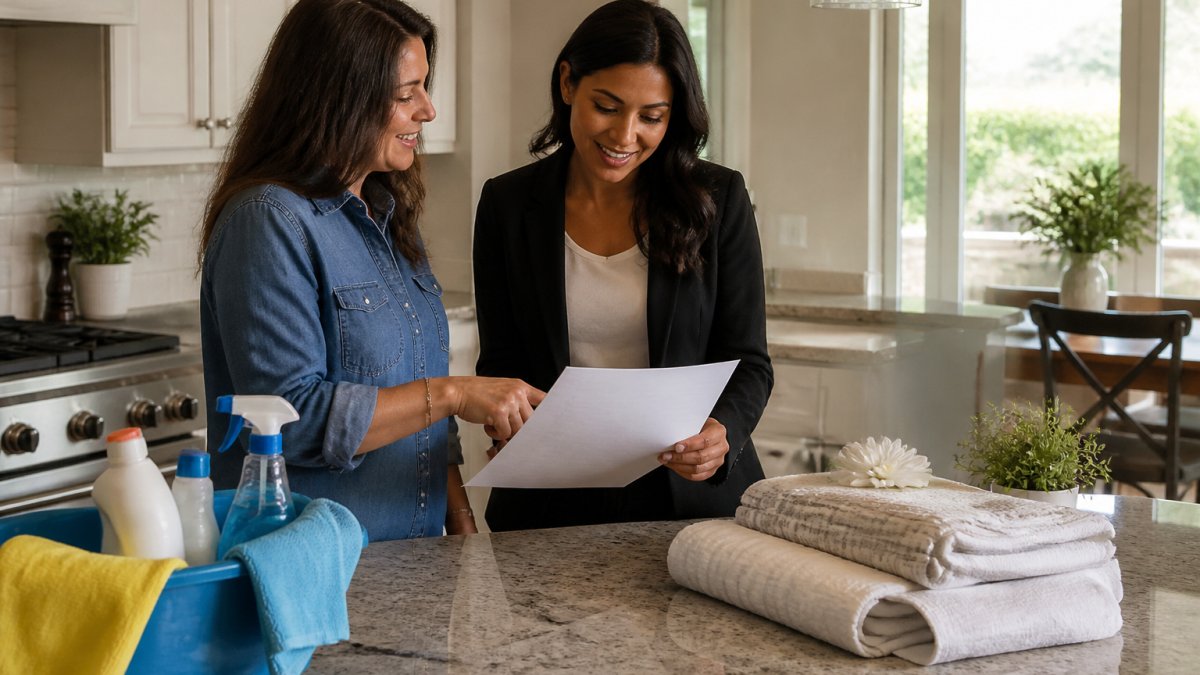
Start with a room-by-room deep clean, then remove roughly a third of what sits on counters and shelves. Pack family photos and personal collections away.
Buyers need to picture themselves in the space, and your memories get in the way. Opendoor's guidance on open houses points out that prep can include deep cleaning, decluttering, staging, and clearing out for several hours, so plan the effort honestly before you commit to a date.
Stage Key Rooms and Boost Curb Appeal
Focus staging on the rooms buyers judge fastest: entry, living room, kitchen, and primary suite. Pull furniture off the walls, add fresh linens, and swap heavy drapes for light ones.
Outside, edge the lawn, clear the walkway, and put a fresh mat at the door. Curb appeal is the first photo and the first impression at once.
If you want a deeper walkthrough of getting a home show-ready fast, our guide on how to prepare your home for sale in Frisco Texas quickly covers the full sequence.
Open House Marketing Ideas That Fill the Room
Promotion is where quiet open houses are won or lost. Treat it like a two-week campaign with online and offline arms running at the same time, and work backward from your event date so nothing gets posted the morning of.
A Two-Week Promotion Calendar
A structured promotion timeline can help:
- 14 days out: Refresh listing photos and the property description, confirm the date and time, and check the local community calendar for competing events. In a fast-growing suburb, a youth sports tournament, a school fundraiser, or a city festival on the same Saturday can quietly cut your walk-in traffic.
- 10 days out: Post the open house to your MLS listing remarks and any agent-to-agent channels your brokerage uses, so buyer's agents can plan to attend.
- 7 days out: Share to neighborhood groups, community boards, and your own social channels with the date, time, and a clear reason to visit.
- 3 to 4 days out: Post a short video walkthrough.
- 1 day out: Send a reminder to your agent's buyer list and any neighbors who expressed interest, and confirm your signage plan.
- Morning of: Re-post a simple reminder with the address and hours, and place signs before the first expected visitor.
Online Promotion: Listing, Social Media, and Local Groups
Refresh your online listing photos and description before you promote. Buyers who see an open house post will check the listing next, and stale photos undercut the invitation.
Then post to the channels where local buyers actually look: neighborhood groups, community boards, and your own social accounts. Ask your agent to share it with their buyer list.
Pay attention to how buyers say they found you. If most sign-ins cite a social post, double down there next time; if most cite a sign, your online reach needs work.
Offline Outreach: Signs, Invitations, and Neighborhood Engagement
Directional signs still work, but placement matters. Put them on the routes buyers actually drive, not just the closest corner, and check any local rules on temporary signs before you post them.
Invite the neighbors personally. They know someone who wants to live near them, and a friendly neighbor referral is one of the strongest leads an open house produces.
For the broader playbook beyond a single weekend, read our guide on how to market a home for quick sale.
Open House Sign-In Sheet Questions That Capture Real Leads
A sign-in sheet should do more than collect names. The right questions tell you who is serious and how to follow up.
Ask for:
- Name, email, and phone number
- Whether they are working with an agent
- Their timeline to buy
- What they are looking for in a home
- How they found out about the open house
Skip anything that feels invasive. Buyers will write a timeline and a price range; they will not write their life story on a clipboard.
The answers also tell you whether your marketing reached real buyers or mostly curious neighbors. If you want to know where your own home sits before those conversations start, request our FREE Home Value Report.
Creating a Welcoming Atmosphere: Greeting, Refreshments, and Accessibility
Hospitality turns a walkthrough into a conversation.
Keep refreshments simple: bottled water, coffee, and a light snack that does not require plates. Skip anything with a strong smell, since scent overwhelms a small entryway.
Accessibility deserves real attention. Clear the path from the street to the door, keep doorways and hallways open, and make sure every light works.
Small touches carry weight. A printed floor plan on the counter helps visitors orient themselves, and a one-page sheet of property features answers questions without you hovering.
Open House Follow-Up Email Template and Lead Nurturing
Follow-up is the step most sellers skip, and it is the one that produces offers. Send a note within 24 hours while the visit is still fresh.
Here is the template we use:
Subject: Thanks for visiting [address] today
Hi [first name],
Thanks for stopping by [address] this weekend. I enjoyed meeting you and hearing what you are looking for.
A few details you may find useful:
- Asking price: [price]
- Key features: [three features from the sign-in notes]
- Next open house: [date and time, or "by appointment"]
If you would like a private showing or have questions about the neighborhood, just reply to this email or call me at [phone].
Best, [agent name] Martin Home Team
Then sort your leads. Buyers with an agent and a short timeline get a call. Buyers without an agent and a longer timeline get added to a weekly listing email.
When you are ready to move from a single open house to a full listing plan, you can see the team's selling services and next steps.
Safety, Privacy, and Liability: Protecting Your Home and Visitors
An open house opens your home to strangers, so plan for safety before the first visitor arrives. The practical work goes further: controlling access, protecting visitor information, and understanding what your insurance actually covers.
Before the Event: Secure the Property
Walk the property and remove anything valuable, including medications, mail, and small electronics. Store financial documents and firearms out of sight and locked. Secure jewelry and anything with sentimental value.
Then think about access. Decide which doors stay locked, which closets and rooms are off-limits, and how visitors will move through the home. A simple printed floor plan can guide traffic and keep people out of private areas without you having to follow every visitor.
During the Event: Manage Access
- Keep at least two people present, ideally your agent plus one more.
- Ask visitors to sign in before touring, and keep the sign-in sheet at the door rather than on a counter inside.
- Keep exterior doors and gates in view, and do not let visitors tour closets and garages unsupervised.
- Walk the home periodically to confirm nothing has been moved or opened.
- Have your agent handle questions about your reason for selling, and ask visitors not to photograph personal items.
Protect Visitor Information
A sign-in sheet collects names, emails, and phone numbers, which makes it personal information you are responsible for. Keep it with you or your agent rather than leaving it on a counter, do not photograph it and text it to others, and store the details in a secure place after the event. Only use the information to follow up about the home or the buyer's search.
Insurance and Liability
Check with your insurance provider about coverage during a public event, and confirm what your policy says about visitors on the property. Your agent should also confirm any local rules that apply to signs and events before you post them. If your home has a pool, a steep driveway, or other features that raise risk, ask your provider whether additional precautions are expected.
Privacy Cuts Both Ways
Ask visitors not to photograph personal items, and have your agent handle questions about your reason for selling.
Measuring Results and Deciding What to Adjust
Attendance alone tells you little. Track the numbers that connect to offers.
| What to track | Why it matters | What to adjust if it is low |
|---|---|---|
| Visitor count | Shows whether marketing reached buyers | Boost online promotion and signage |
| Sign-in completion rate | Shows how well you captured leads | Simplify the sheet, greet at the door |
| Agent-represented share | Shows whether you reached unrepresented buyers | Shift promotion to buyer-focused channels |
| Follow-up reply rate | Shows real interest versus curiosity | Rewrite the follow-up email subject line |
| Private showing requests | The clearest signal of serious interest | Revisit price and presentation |
Review these after each event and change one thing at a time. One open house is a test, not a verdict.
If the same issue repeats, look at the home's positioning first.
Hosting an open house that actually produces offers takes timing, prep, and follow-up working together, and most sellers only get one shot at the first weekend. That is where a team that knows the local market earns its keep.
Frequently Asked Questions
How long should an open house last?
Most open houses run two to three hours, typically on a weekend afternoon. The ideal length depends on your local market and buyer traffic. In Frisco, a two-hour window on Saturday or Sunday from 1 to 3 p.m. often captures the most visitors. Avoid extending beyond three hours, as fatigue sets in for both you and your agent. Shorter, well-promoted events tend to draw more serious buyers than long, open-ended sessions.
What should sellers do before an open house?
Sellers should deep clean, declutter, and depersonalize the home. Remove personal photos, valuables, and excess furniture. Stage key rooms, boost curb appeal with fresh mulch and a clean entry, and ensure all lights work. Secure pets and plan to vacate during the event. Use an open house checklist for sellers to stay organized. Also confirm with your agent that signage, refreshments, and sign-in materials are ready.
How do you promote an open house effectively?
Promote through online and offline channels. Update your online listing, share on social media, and post in local neighborhood groups. Use open house marketing ideas like targeted email invitations, printed flyers, and directional signage. Announce at least five to seven days in advance. In Frisco, check for conflicts with local events and school activities. Neighborhood outreach, including door hangers, can boost attendance from nearby residents.
How do you follow up with buyers after an open house?
Send a personalized follow-up email within 24 hours. Use an open house follow-up email template that thanks visitors, recaps key property features, and invites questions. Ask for feedback on what they liked or disliked. For serious leads, offer a private showing. Track responses and add notes to your CRM. Consistent follow-up within two days keeps your home top of mind and helps convert interest into offers.