 how-to
How to Market a Home for Quick Sale
Table of Contents
- How to Price a Home to Sell Quickly
- Improve Curb Appeal to Attract Buyers Immediately
- Real Estate Listing Photography Tips That Sell Homes
- How to Write a Real Estate Listing Description That Converts
- Home Staging Tips to Sell Faster and Stand Out
- Promote Your Listing Across Multiple Channels
- Maximize Showings and Buyer Inquiries
- Track Performance and Adjust Your Strategy
- Frequently Asked Questions
Last Updated: October 10, 2026
How to Price a Home to Sell Quickly
Setting the right asking price is the fastest way to market a home for quick sale and attract serious buyers. The sweet spot is competitive pricing based on what similar homes in your area are actually selling for, not what you hope to get.
A data-driven approach compares your home against recent sales of similar properties, showing exactly where your home fits in the current market and which homes sold faster.
Homes priced within 5% of market value tend to generate buyer inquiries within the first two weeks. Pricing higher often means waiting 30+ days for the first serious offer. The difference between a quick sale and a slow one often comes down to that first impression when buyers see your listing price.
Improve Curb Appeal to Attract Buyers Immediately
Your home's exterior is the first thing buyers see. Strong curb appeal makes them want to step inside.
Focus on these high-impact improvements:
- Landscaping: Trim overgrown bushes. Mulch flower beds. Add fresh plants near the entrance.
- Front door: Paint it a bold, welcoming color. Replace old hardware. Clean the glass.
- Walkway: Power wash concrete. Repair cracks. Remove weeds.
- Lawn: Mow regularly. Edge borders. Overseed bare patches.
- Lighting: Add outdoor lights near the entrance. Replace burned-out bulbs.
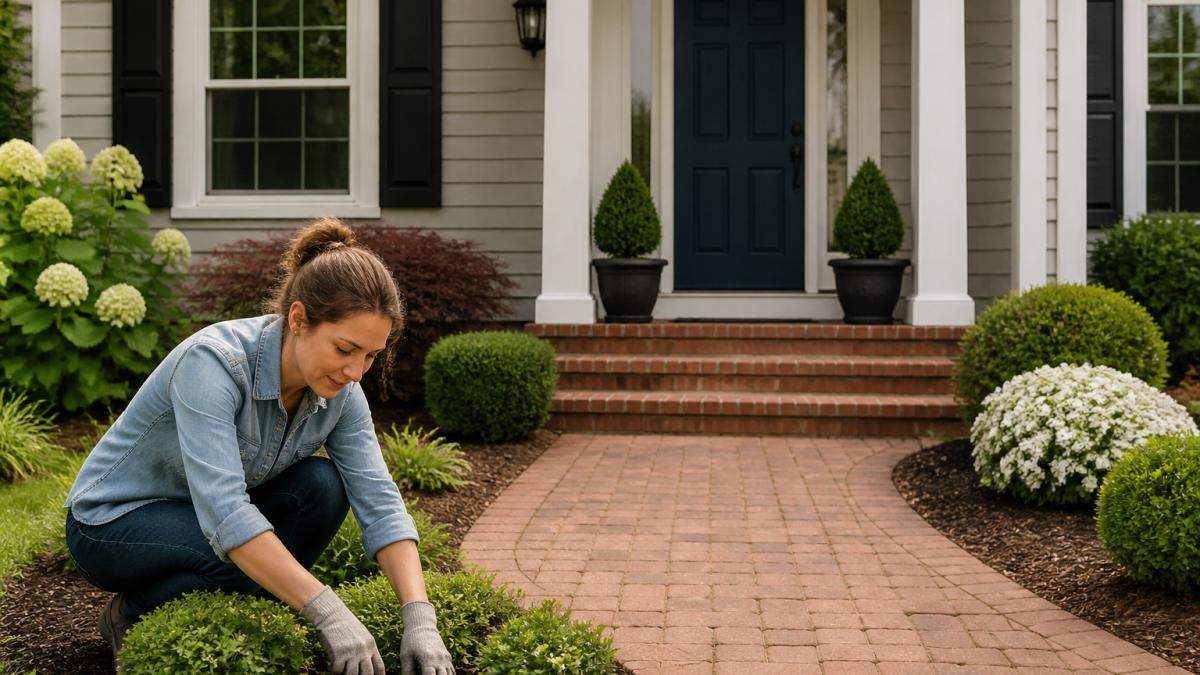
These fixes create a first impression that says "this home is cared for," making buyers more likely to schedule a showing.
Real Estate Listing Photography Tips That Sell Homes
Professional photos are essential, they're the reason buyers click on your listing online.
Hire a professional photographer who specializes in real estate. They'll use lighting, angles, and staging to make rooms look larger and brighter, shooting during peak natural light hours (late morning or early afternoon).
Include these shots in your listing:
- Front exterior (curb appeal)
- All main living spaces (living room, kitchen, dining room)
- All bedrooms
- All bathrooms
- Outdoor spaces (patio, yard, deck)
- Unique features (fireplace, built-ins, views)
Avoid cluttered backgrounds, excessive shadows, and wide-angle distortion. Clean surfaces and neutral decor photograph better.
Virtual tours and video walkthroughs are becoming standard. A 2-3 minute video tour increases buyer interest and reduces non-serious inquiries.
How to Write a Real Estate Listing Description That Converts
Your listing description tells the story of the home, a narrative that helps buyers imagine living there, not a feature dump.
Start with the home's best feature or strongest selling point, the updated kitchen, large backyard, or location near good schools.
Then describe the flow and feel of the home:
- "Walk into the bright, open living room with natural light from large windows."
- "The updated kitchen features stainless steel appliances and granite counters."
- "The primary suite offers a spa-like bathroom and walk-in closet."
Use specific details: "half-acre lot with mature oak trees and patio" instead of "nice backyard"; name schools and ratings instead of "good schools."
Keep it concise, three to five short paragraphs with line breaks for easy mobile scanning.
Include practical information:
- Year built or last renovated
- Square footage
- Number of bedrooms and bathrooms
- Lot size
- Parking (garage, driveway, street)
- Utilities (gas, electric, water)
- HOA details if applicable
- Any recent upgrades
End with a call to action: "Schedule your showing today" or "Contact us for more information."
Home Staging Tips to Sell Faster and Stand Out
Staging arranges and decorates a home to appeal to the broadest range of buyers and make it look move-in ready.
Remove personal items like family photos, religious items, and unique artwork so buyers can imagine their own life in the space.
Declutter every room. Remove excess furniture, toys, and decorations, spacious homes sell faster than cramped ones.
Deep clean everything:
- Vacuum all carpets and rugs
- Mop hard floors
- Clean windows inside and out
- Wipe down baseboards and trim
- Clean light fixtures
- Scrub bathrooms and kitchen thoroughly
Paint accent walls neutral tones (warm grays, soft whites, muted earth tones) if they're bold or dark.
Arrange furniture to show room flow and clear pathways. Buyers should walk through easily without navigating obstacles.
Lighting matters. Open all blinds and curtains during showings. Add lamps to dark corners. Replace dim bulbs with brighter ones. Natural light and good artificial lighting make homes feel larger and more inviting.
Promote Your Listing Across Multiple Channels
A strategic promotion plan to market a home for quick sale prioritizes high-impact channels first, then layers in secondary channels based on your market and timeline.
Primary channels (launch immediately):
- Multiple Listing Service (MLS): The MLS syndicates to Zillow, Realtor.com, Trulia, and other major portals automatically.
- Your agent's website: Ensure your listing is featured prominently to drive traffic from past clients and local searches.
- Social media (Facebook and Instagram): Post listing photos, a 60-second video tour, and key details on day one. Repost every 3-4 days for the first two weeks using neighborhood and market hashtags.
Secondary channels (deploy by day 3-5):
- Email marketing: Your agent should send your listing to their past client database and sphere of influence in at least two campaigns during the first two weeks.
- Neighborhood Facebook groups and community forums: Post in local groups where residents discuss homes, schools, and neighborhoods.
- Open houses: Schedule for the first or second weekend and advertise prominently. Peak times are Saturday 1-4 p.m. and Sunday 2-5 p.m.
In the first week, focus on MLS, agent website, and social media. By day 5, add email and neighborhood groups. Schedule your open house for weekend two if you're not receiving strong showing interest by day 7.
Ask your agent to track which channel generated each showing request and inquiry. After two weeks, patterns emerge: If social media drives traffic but no showings, your listing description or photos need work. If email is silent, your agent's list may need expansion.
Maximize Showings and Buyer Inquiries
More showings mean more opportunities to sell.
Offer flexible showing windows. Coordinate with your agent to establish a schedule that works for your life but remains open enough to capture interest.
Respond to inquiries fast. When a buyer's agent calls to schedule a showing, confirm within an hour. Slow responses signal that you're not motivated to sell.
Leave the home spotless before each showing. Adjust lighting and temperature, open blinds, and secure pets in one area.
If you're getting showings but no offers, consider offering a closing cost credit or including appliances in the sale.
Track showing feedback. Ask your agent what buyers are saying. Are they loving the home but concerned about price? Are they noticing something that needs attention? Use this feedback to adjust your strategy.
Track Performance and Adjust Your Strategy
Your listing is live. Now you need to monitor how it's performing against benchmarks and adjust quickly if something isn't working.
Key metrics to track weekly:
- Days on market (DOM): How long has your home been listed?
- Showing count: How many showings per week? (Target: 2-4 in an active market; 1-2 in a slower market.)
- Listing views: How many people viewed your listing online? (Ask your agent for MLS view counts and social media analytics.)
- Inquiry source: Which channels generated showing requests? (MLS, agent website, social media, email, open house, neighborhood group?)
- Buyer feedback: What are agents saying about their clients' reactions? (Price concerns? Condition issues? Specific room complaints?)
- Offer activity: How many offers have you received? At what price relative to your asking price?
Decision framework by day 14:
Scenario 1: Strong performance (3+ showings per week, 1+ offer)
Continue current strategy. Respond to all inquiries within one hour. No changes needed unless offers are significantly below asking price (more than 5%).
Scenario 2: Moderate interest (1-2 showings per week, no offers yet)
Review buyer feedback. If feedback mentions price or condition, a 3-5% price reduction often triggers new searches.
Scenario 3: Low interest (fewer than 1 showing per week, minimal inquiries)
Something is significantly wrong. Investigate in this order:
- Price: Check recent comparable sales. If your home is priced more than 5% above market, a price reduction is urgent. Even a 5% reduction can trigger new buyer searches and showings within days.
- Photos: If your listing photos are poor quality, blurry, or poorly lit, hire a professional photographer immediately. Photos are the reason buyers click on your listing. Poor photos mean fewer showings, period.
- Description: Rewrite your listing description. Lead with your home's strongest feature. Use specific details instead of generic language. Ensure all practical information (year built, square footage, lot size, recent upgrades) is included and easy to scan.
- Marketing visibility: Increase social media posts to 3-4 times per week. Ask your agent to send an additional email campaign. Post in neighborhood Facebook groups. These efforts cost little but expand reach.
If you make a price reduction, expect to see new showings within 3-5 days. If you refresh photos and description, expect interest to pick up within a week.
Decision framework by day 30:
If your home has not received an offer by day 30, the market is signaling that your price, presentation, or marketing is misaligned with buyer expectations. At this point:
- A price reduction of 5-10% is often necessary to reignite buyer interest.
- Consider whether your home's condition or features genuinely match your asking price. If not, either reduce price or invest in visible upgrades (fresh paint, new flooring, updated fixtures).
- Evaluate your showing availability. If your home is only available certain times, expand availability. Serious buyers will not wait for a convenient window.
- Review all feedback cumulatively. Patterns emerge: If multiple buyers mention the same concern, address it directly.
Weekly review checklist:
- Review showing count and sources with your agent.
- Check listing views and social media engagement.
- Collect buyer feedback from all showings.
- Assess whether current metrics meet your target for that week.
- If metrics are below target, identify which adjustment to make (price, photos, description, marketing, or availability).
- Implement adjustment within 24-48 hours.
- Measure impact over the next 7 days.
Frequently Asked Questions
How do I market my home to sell quickly?
Start with competitive pricing based on recent comparable sales, then invest in professional photography and a detailed listing description. Stage your home to show its best features, maintain excellent curb appeal, and promote the listing across online platforms, social media, and email campaigns. Set flexible showing availability and respond promptly to buyer inquiries. Track metrics like listing views and days on market to adjust your strategy if needed within the first two weeks.
How should I price my home for a quick sale?
Price your home competitively by analyzing recent sales of similar properties in your area. Overpricing delays buyer interest and extends days on market; underpricing leaves money on the table. Work with a real estate professional who understands local market conditions to find the right asking price. If your listing generates few inquiries after one week, be prepared to adjust downward. The goal is attracting strong buyer demand without sitting on the market.
Do professional photos help sell a home faster?
Yes. Homes with professional photography receive significantly more listing views and buyer inquiries than those with amateur photos. Quality images showcase natural light, room dimensions, and property features clearly. Include exterior shots, well-lit interiors, and detail photos of key selling points. Professional photos also support virtual tours, which expand your market exposure beyond local buyers and reduce time to sale.
What should I include in a home listing description?
Write a compelling listing description that highlights property features, location benefits, and move-in readiness. Include details like square footage, room count, recent upgrades, and any special amenities. Use clear, benefit-focused language that speaks to your target buyers' needs. Keep it concise but descriptive, and always proofread for errors. A strong description improves listing views and attracts serious buyers who understand what they're getting.