 blog
House Hunting in Plano: 2026 Tips for Buyers
Last Updated: October 23, 2026
Quick Summary
Approach house hunting in Plano during 2026 by reading market data carefully, since closed-sale volume ran about 6.1% behind the prior year's pace. Get pre-approved before touring, verify school boundaries by address, and score each home on paper against the same weighted criteria.
- Plano saw 1,743 homes sold in 2026 versus 1,857 over the same period in 2025.
- When median days on market climbs past roughly 45 to 60, you have room to negotiate.
- Ask for a pre-approval letter, not a pre-qualification, before touring any homes.
- Budget 1% to 2% of the home's value per year for maintenance costs.
- Verify school attendance zones by address with the district, not by subdivision name.
Table of Contents
- What the 2026 Plano Market Means for Your House Hunting
- Get Financing Ready Before Your First Home Tour
- Build a Plano Home Tour Checklist Before You Walk In
- Questions to Ask When Viewing a House in Plano
- How to Compare Houses When Buying in a Slower Market
- Budget Beyond the Home Price: Taxes, Insurance, and Total Cost
- Neighborhood and School Verification Tips for Plano House Hunting
- Conclusion
- Frequently Asked Questions
What the 2026 Plano Market Means for Your House Hunting
Plano closed-sale volume in 2026 ran about 6.1% behind the prior year's pace, with 1,743 homes sold versus 1,857 over the same period in 2025, according to Haistings Real Estate's Plano market data.
At Martin Home Team, we've watched buyers get tripped up by exactly this. The market is not one story. It's several snapshots taken at different times, and they don't all agree.
Reading the Numbers Before You Read Listings
Start with the dates. A February 2026 snapshot from the Mark Bradford Group put Plano's median sale price near $485,000, down 7.2% year over year, with homes taking about 75 days to sell.
Those two pictures look different. They measure different things on different dates. A median sale price reflects closed transactions that were negotiated 30 to 60 days earlier; a median list price reflects what sellers are asking today.
Here's what matters for your search:
- Days on market is your use signal. Longer marketing periods mean sellers are waiting. When median days on market climbs past roughly 45 to 60, you have room to ask for repairs, closing cost help, or a price reduction.
- Sale-to-list ratio tells you how firm to be. A 97% to 99% range, as Bale Real Estate Group reports, suggests modest negotiating room, not deep discounts. A ratio near 100% means sellers are holding price; a ratio in the low 90s means the opposite.
- Inventory counts reset monthly. Don't plan a spring search using a winter number. Active listings in Plano can swing by hundreds of homes between January and May.
What a Balanced 2026 Plano Market Actually Changes
A market running behind the prior year's pace does not mean prices collapse. It means the pace of competition eases. In practice, Plano buyers in 2026 are seeing:
- Fewer bidding wars on well-priced homes, but still competition on the best-conditioned listings in sought-after attendance zones.
- More seller concessions, especially on homes that have sat past 30 days. Closing cost help and repair credits become negotiable in a way they were not in 2021 and 2022.
- Longer option periods and inspection windows are easier to negotiate when days on market are elevated.
If you want to learn to spot the shift yourself, our guide on how to spot a buyer's market in Plano walks through the seven signals we track.
Get Financing Ready Before Your First Home Tour
A pre-approval letter is a lender's written estimate of how much it will lend you, based on verified income, assets, and credit. It is not a guarantee, but it tells sellers you can close, and in a market with 45 to 60 days of average time on market, it separates you from browsers.
Get this done before you tour anything. Here's the order we recommend:
- Pull your credit reports and fix errors first.
- Gather two years of tax returns, recent pay stubs, and bank statements.
- Compare at least two lenders on rate and fees, not rate alone.
- Ask for a pre-approval letter, not a pre-qualification.
- Confirm the letter's expiration date and how it updates if your budget shifts.
A common mistake is treating pre-approval as a spending target. It's a ceiling. Your real number comes from the budget work further down.
First-Time Homebuyer Programs in Texas for 2026
Texas runs first-time buyer assistance through state and local channels, and program details, income limits, and available funds change often. We won't quote figures here because they shift and a wrong number can cost you real money.
What we will say: ask early. Some programs require homebuyer education before closing, and that adds weeks. Our breakdown of first-time homebuyer programs in Texas for 2026 covers the categories to compare.
Build a Plano Home Tour Checklist Before You Walk In
A Plano home tour checklist is a written list of what you inspect, ask, and record at each property so you compare houses on evidence instead of memory. Bring it on paper or in your phone. Every house starts to blur after the fourth one.
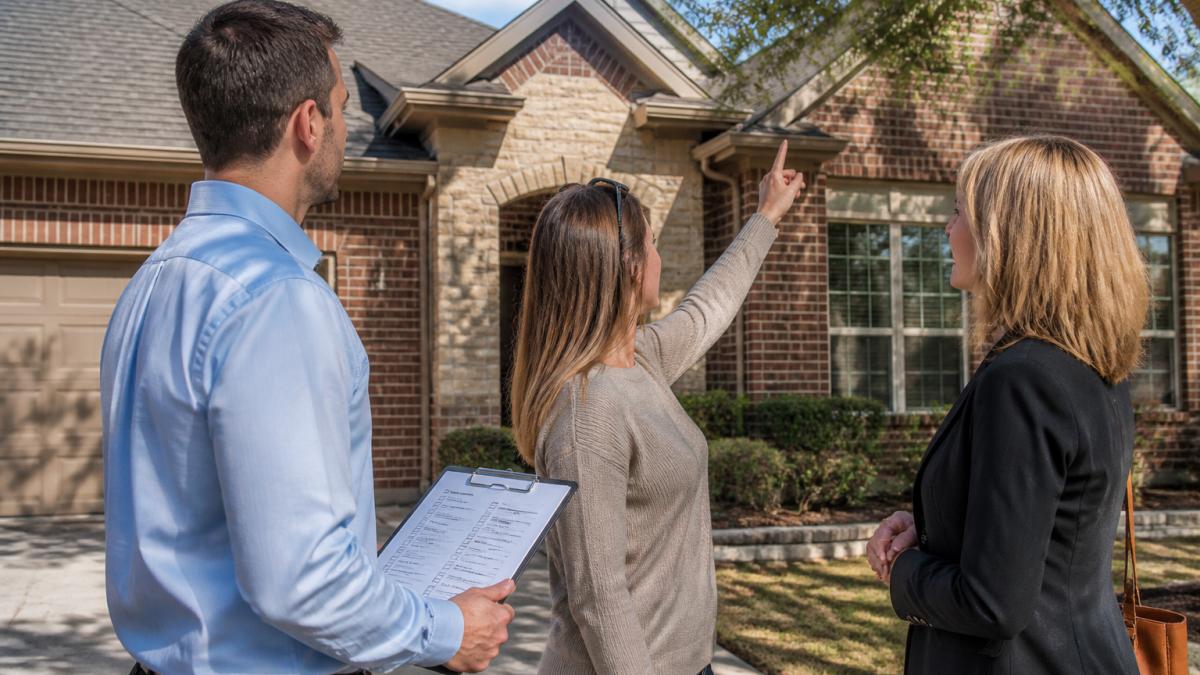
Your checklist should cover:
- Exterior: roofline, foundation cracks, drainage slope, fence condition
- Systems: HVAC age, water heater age, electrical panel, attic insulation
- Interior: water stains, window seals, door alignment, floor levelness
Questions to Ask When Viewing a House in Plano
The best questions to ask when viewing a house are the ones that surface cost and risk, not the ones that confirm what you already see. Anyone can see the kitchen. Fewer buyers ask what the roof will cost in five years.
Ask these:
- How old is the roof, and is there a warranty?
- What have the utility bills averaged over the last 12 months?
- Has the foundation been repaired, and is there an engineer's report?
Write the answers down in the seller's own words. You'll want them when you compare.
How to Compare Houses When Buying in a Slower Market
Comparing houses when buying comes down to scoring each one against the same criteria, weighted by what you actually care about.
Use a simple 1-to-5 scale across six categories: location, condition, layout, total monthly cost, school fit, and resale appeal. Weight location and total cost highest. Those are the two you can't renovate later.
| Category | Weight | What a 5 Looks Like | What a 1 Looks Like |
|---|---|---|---|
| Location | 25% | Fits commute and noise needs | Backs to a busy road |
| Total monthly cost | 25% | Comfortably inside budget | Stretches you thin |
| Condition | 15% | Systems have years left | Roof and HVAC near end |
| Layout | 15% | Works without remodeling | Needs structural change |
| School fit | 10% | Boundary confirmed | Boundary uncertain |
| Resale appeal | 10% | Broad buyer pool | Narrow appeal |
Set your non-negotiables before you tour. Three is a good number. Everything else is a compromise you can price.
Budget Beyond the Home Price: Taxes, Insurance, and Total Cost
Your monthly payment is principal, interest, property taxes, and homeowners insurance. Most buyers plan for the first two and get surprised by the last two. In Plano, property taxes are a real line item, and Texas assesses them through local appraisal districts with rates set by the taxing units that serve your address.
We won't quote a rate here, because the effective rate depends on your property, your exemptions, and the current year's levies. Instead, do this:
- Look up the property's tax history on the county appraisal district site. Confirm the assessed value and the taxing units that apply to that specific address, because rates vary by city, county, school district, and special districts.
- Ask your lender to escrow taxes and insurance in the payment quote. Escrow is based on the prior year's bill, so a new owner's payment can shift after the first reassessment.
- Get an insurance quote before you make an offer, not after. Texas homeowners insurance varies widely by roof age, construction, and claims history, and a hail claim on the property can affect insurability.
- Add HOA dues, if any, to the monthly total. Plano has many deed-restricted subdivisions with mandatory HOAs, and dues can cover common areas, pools, and sometimes exterior maintenance.
- Budget 1% to 2% of the home's value per year for maintenance. On a $500,000 home, that is $5,000 to $10,000 annually, or roughly $417 to $833 per month set aside.
The Costs Buyers Forget
Beyond the four components of the mortgage payment, Plano buyers should plan for:
- Homestead exemption timing. The Texas homestead exemption reduces the taxable value of your primary residence, but it applies going forward and must be filed. Ask the appraisal district about deadlines and whether the prior owner's exemption will roll off.
- Supplemental tax bills. If the property is reassessed after closing, a supplemental bill can arrive months later. Ask your lender how it handles escrow shortages.
- HOA transfer fees and reserves. Some HOAs charge a transfer fee at closing and require reserve contributions. Request the HOA's current budget, reserve study, and rules before your option period ends.
Our guide on first-time homebuyer programs in Texas for 2026 covers the assistance categories that can offset some of these upfront costs, and it is worth reading alongside this budget work.
Neighborhood and School Verification Tips for Plano House Hunting
Verify school boundaries by address, not by city or subdivision name. School attendance zones can split a single street, and a listing's school info is a marketing claim until the district confirms it. Call the district or use its official boundary tool, and get the answer in writing.
For neighborhood fit, do three things:
- Drive it at 5 p.m. on a weekday. Traffic and noise look different than they do on a Saturday morning.
- Check the crime data for the specific area. Our North Dallas area crime guide covers how to read it.
- Compare districts side by side. Our school guide for north of Dallas lays out the comparisons.
Then check zoning and any planned development nearby. A quiet street can change fast.
Conclusion
The 2026 Plano market rewards buyers who read the data, prepare financing early, and score homes on paper instead of emotion. The challenge is doing all three without losing track of the details. That's where having a local agent who has run this process many times makes the difference. When you're ready to move from research to tours, connect with a local buyer's agent who knows these neighborhoods block by block.
Frequently Asked Questions
What should you consider when house hunting in Plano?
Start with the numbers that decide your monthly payment: price, property taxes, insurance, and closing costs. Then narrow by neighborhood, commute, and school boundaries you have verified directly. In 2026, Plano reports show slower sales and longer marketing times, with closed-sale volume 6.1% behind the prior year's pace, so you have more room to tour carefully and compare before offering. Set non-negotiables first, keep a written scorecard for each home, and confirm every listing detail rather than relying on the listing description alone.
How do you prepare for a home tour in Plano?
Build a Plano home tour checklist before you leave the house. Print the listing sheet, note the asking price and days on market, and write down your top five must-haves so you can score each home the same way. Bring a tape measure, a phone charger, and a notebook. Schedule tours in daylight so you can see the roof, foundation, and drainage. Ask your agent for the seller's disclosure and any HOA documents in advance. Reported 2026 snapshots put Plano homes at roughly 45 to 75 days on market, so ask how long each home has been listed.
How can you compare houses during a house hunt?
Use one scorecard for every home and score the same categories: price per square foot, condition, layout, lot, noise, commute, and total monthly cost including taxes and insurance. Take photos and short videos so your memory does not blur homes together. Note what you would change and what that change would cost. When you compare, weigh the total cost of ownership rather than the sticker price, since two Plano homes at similar prices can carry very different tax and insurance bills. Review your scorecards the same evening while the details are fresh.
What should first-time buyers look for when viewing a house?
Look past staging and check the systems that cost the most to replace: roof age, HVAC age, water heater, electrical panel, and signs of water intrusion. Open every door and window, run the taps, and look at the attic and garage if access is allowed. Ask about the age of major components and any past repairs. For financing, ask your lender which first-time homebuyer programs in Texas for 2026 you may qualify for before you tour, so your budget reflects the actual monthly payment rather than a rough guess.